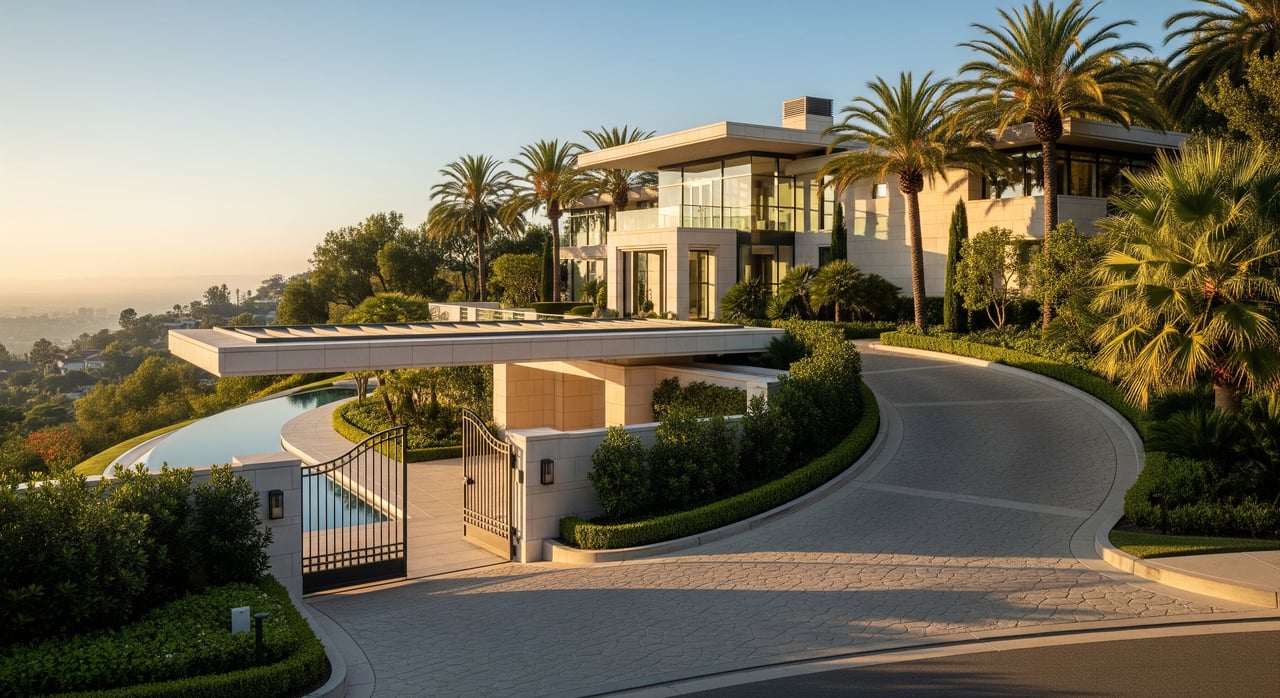
What makes one Beverly Hills estate command a staggering premium while a similar home nearby sits on the market? If you have wondered how to read a luxury list price with confidence, you are not alone. In a market with few true comparables and many unique properties, pricing can feel opaque. In this guide, you will learn the key drivers behind Beverly Hills pricing, how pros build value, and simple steps you can use to evaluate any high-end listing. Let’s dive in.
Market context in Beverly Hills
Beverly Hills operates differently from the broader market. Trophy properties are rare, and each one is unique. That means transaction volume is low and pricing relies on a small set of comparables, off-market sales, and qualitative adjustments.
From 2020 to 2021, luxury demand and prices surged. In 2022 and 2023, rising mortgage rates cooled activity and prices moderated. The market stabilized through 2023 and into 2024. Ultra-prime trophy homes showed more resilience than entry-level luxury, often supported by cash buyers and international demand. Sales velocity still varies by micro-neighborhood, property condition, and provenance.
Local supply is limited. Parcel sizes and permitting rules constrain large new builds. Buyer pools also shift with currency trends, travel patterns, and policy changes. All of this supports careful, property-specific pricing rather than broad averages.
What drives pricing today
Luxury buyers focus on a blend of tangible and intangible factors. The most common price drivers include location, lot, view, privacy, condition and design pedigree, architectural provenance, amenities, market exposure, and development potential.
Location and micro-markets
Micro-neighborhoods matter more than citywide averages. Different pockets have distinct buyer pools and norms:
- South Beverly Hills and 90212 flats, known for proximity to retail and parks.
- Beverly Hills Flats, prized for walkability and central access.
- Beverly Hills Hills in 90210, valued for views and privacy.
- Trousdale and the Bel Air border, where architecture and ridge-top outlooks carry weight.
Your preference determines which premium applies. If you value walkable access to shops and services, the flats may command your attention. If you prize panorama and privacy, hillside homes often lead.
Lot size and usable land
At the high end, lot characteristics often outweigh price per interior square foot. Large, flat parcels and full-acre properties are rare. Buyers pay premiums for usable outdoor space that supports a lawn, pool, guesthouse, or court. Raw acreage on a steep slope is less valuable than flat, functional yard area.
Views and orientation
City skyline, canyon, coastline, and sunset views can significantly move price. The size of the premium depends on quality, permanence, and orientation. Unobstructed, panoramic city lights with minimal risk of future blockage command more than partial, uncertain views. West-facing orientations that capture sunset are often favored.
Privacy and security
Long gated drives, generous setbacks, and thoughtful site design that reduces sightlines are highly valued. Buyers who require discretion tend to prioritize setups that feel secure without being conspicuous. The right privacy features can widen the buyer pool and support price resilience.
Condition and design pedigree
Turnkey homes with coherent design, quality engineering, and recent system upgrades sell faster and higher. Structural and systems improvements, seismic work, properly permitted additions, and smart integration carry more weight than surface-level cosmetic refreshes. Credible design pedigrees can add a premium when the architecture is cohesive and well documented.
Architectural style and provenance
Recognized architects, historic notes, or a well-documented ownership story can support a “provenance premium.” That said, provenance is not always a plus. Heavy personalization or notoriety can reduce marketability and require rework, which may lower value.
Amenities and systems
High-value features include a pool and spa, guesthouse or ADU, theater, wine storage, elevator, generous secure parking, professional-grade kitchens, staff quarters, and seamless indoor-outdoor transitions. Savvy buyers also account for operating costs like staff, pool service, and landscaping.
Entitlements and redevelopment potential
Permits, setbacks, geological conditions, and hillside rules shape what you can build. Buyers planning to expand or rebuild often pay more for large, flat lots with favorable development profiles. Unpermitted work or code issues can drag price down due to required remediation.
Listing strategy and exposure
How a property is brought to market influences price. Pocket listings can sustain higher list prices because they focus on a small pool that values discretion. Full public exposure can create multiple-offer dynamics and sometimes higher final numbers. Messaging to international buyers versus domestic UHNW groups also affects strategy.
How professionals determine value
Top brokers and appraisers blend several methods to triangulate value in Beverly Hills. Each approach has strengths and limitations.
Comparable sales approach
This is the primary method. You choose recent, proximate sales that best match on submarket, lot, view, condition, and amenities, then apply adjustments for differences. In Beverly Hills, the challenge is scarcity. There are few close matches, and the most relevant comps may be off-market or older. Best practice is to widen geography or time carefully, explain the rationale, and verify private deals where possible.
Cost approach
Replacement cost minus depreciation can help when a home is new, unique, or when you are deciding between buying and building. In Beverly Hills, land value and location often dominate the equation, so cost alone rarely sets the top line. Still, it is useful context for build-versus-buy decisions.
Income approach
For primary residences, yield is rarely the driver. The income approach can apply if a property has meaningful rental or event revenue, but most luxury buyers in Beverly Hills do not price their purchases as investments.
Broker pulse and BPOs
At the ultra-prime level, informed broker opinions and confidential pocket comps can be as influential as public data. Market pulse matters when few properties change hands and the buyer pool is small.
Appraisals for jumbo loans
Lenders require support for adjustments. Appraisers lean on neighborhood trends, broker comps, and the cost approach to substantiate value. Cash buyers can bridge appraisal gaps. If you are financing, plan for the appraisal to anchor negotiations.
Common adjustments in comps
- Submarket premiums for flats versus hills
- Lot size, especially per 1,000 square feet of usable land
- View quality and permanence
- Condition and renovation level
- Architectural pedigree and provenance
- Amenity adds or deducts for guesthouses, pools, courts, and parking
A simple framework to read any list price
Use this step-by-step process to understand how a price was set and whether it fits your objectives.
Define the submarket. Confirm the zip, the block, and whether the home is in the flats or hills. Identify the true peer set.
Set the time frame. In a low-volume market, 6 to 18 months of comps is common. Apply time adjustments if the market moved during that period.
Compare the lot and orientation. Focus on usable land, topography, sun exposure, and view corridors. These factors often explain bigger price gaps than interior square footage.
Score condition and design pedigree. Turnkey, architecturally coherent homes earn premiums. Projects face discounts and longer timelines.
Count amenities and systems. Note guesthouses, staff quarters, secure parking, theater, wine, elevator, pool, and smart integration.
Confirm listing strategy. Is it pocketed for privacy, or widely marketed for competition? Strategy can explain a higher list price or quicker absorption.
Check days on market and sales-to-list ratios. Look at your comp set to gauge whether the pricing is aggressive or conservative.
Buyer checklist for Beverly Hills luxury
Use this quick reference before making an offer.
- Identify the precise micro-neighborhood and select 5 to 8 best comps with sale dates and prices.
- Confirm view permanence by checking nearby parcels and potential development.
- Verify permits, legal status of guesthouses or ADUs, and correct any code issues.
- Assess major systems such as foundation, roof, seismic upgrades, HVAC, and electrical.
- Review estimated property taxes and supplemental assessments. Budget for ongoing maintenance and staffing.
- Understand parking access, driveway geometry, and local street restrictions.
- Ask about seller motivations and timing to gauge flexibility.
- Align your financing or cash readiness, since appraisals may constrain a financed purchase.
Seller pricing checklist
If you are preparing to list, use these steps to craft a strategy that matches your target buyer.
- Identify your closest high-quality comps and write a transparent adjustment narrative.
- Choose your exposure strategy. Decide between full MLS reach and a discreet pocket approach based on the property and buyer profile.
- Invest in design-forward marketing that tells the property’s story. Consider professional photography, film, 3D tours, and the architect’s narrative.
- Address repairs or neutralize highly personalized spaces before going live.
- Price to your target cohort, whether international collectors, end users, or developers.
Practical examples of adjustments
When building an opinion of value, start with 3 to 8 comps that match submarket and lot orientation. Apply time adjustments if the market has moved. Convert lot differences to a per 1,000 square feet basis for usable land, not just total acreage. Support view premiums using nearby sales with similar outlooks. For condition, estimate cost to cure or align with comps in similar turn-key shape. Assemble a value range with best-case, base-case, and conservative scenarios.
For trophy properties, consider marketability. If there are only a handful of likely buyers at the price tier, elasticity is limited. That may argue for either a targeted pocket strategy or a bold public launch, depending on goals.
Closing considerations for high-end deals
If you plan to finance with a jumbo loan, expect appraisers to document adjustments and possibly challenge aggressive pricing without strong support. Cash buyers can move faster and bridge appraisal gaps. Title work and due diligence matter. Confirm easements, hillside protections, or conservation constraints that affect redevelopment. Review property tax implications under local rules, including supplemental assessments after closing.
What this means for you
You do not need perfect comps to make a confident decision. You need a clear framework, verifiable data, and trusted guidance on how Beverly Hills buyers value land, views, privacy, design, and provenance. When you analyze the micro-market, prioritize usable acreage, confirm view permanence, and weigh condition and pedigree, list prices start to make sense.
If you want a discreet, design-minded strategy tailored to your goals, we are here to help. From curated off-market access to valuation consultations and concierge coordination, you can navigate Beverly Hills with clarity and calm.
Joslin Cuthbertson offers private-client representation with access to gated inventory, valuation advice, and end-to-end lifestyle support. Reach out to discuss your goals and get access to private listings.
FAQs
How are Beverly Hills luxury homes priced compared to the broader LA market?
- Pricing is more property-specific due to scarce comps and unique features, so values rely on micro-neighborhoods, usable land, views, and privacy more than simple averages.
What matters more than price per square foot in Beverly Hills?
- Usable lot size, view quality and permanence, privacy, and the level of design and system upgrades often drive value more than interior square footage.
How do off-market or pocket sales impact my valuation?
- Verified off-market sales can set expectations and should be included when building comps, especially for trophy properties with few public matches.
Does a famous architect or celebrity owner always add value?
- Not always. Provenance can add a premium when quality and documentation are strong, but heavy personalization or notoriety can reduce marketability and price.
How should I compare views when assessing a price?
- Look at quality, breadth, night view appeal, and permanence. Favor comps with similar outlooks and confirm that future development will not block the corridor.
What is the best listing strategy for a high-end Beverly Hills home?
- It depends on the property and target buyer. Discreet pocketing can preserve privacy and price integrity, while broad exposure can create competition and maximize sale price.