If you want lock-and-leave ease without giving up space, privacy, or service, Century City deserves a close look. You sit next to Beverly Hills and the Westfield Century City hub, with hotel-level amenities, short commutes, and refined towers tailored to busy lives. In this guide, you’ll learn what full-service buildings actually provide, typical HOA ranges, how to compare towers, and the key documents to review before you buy. Let’s dive in.
Why Century City for luxury condos
Century City places you minutes from Beverly Hills and a major retail and dining destination, with offices clustered along Avenue of the Stars and Century Park East. That mix is why executives value the area’s efficiency and services.
Price context varies by metric and date. Zillow’s typical home value (ZHVI) was roughly $1.40M as of December 2025, while a January 2026 Redfin snapshot showed a median sale price near $1.85M, and late-2025 Realtor data reported a median list price around $2.37M. The spread reflects unit variety, from compact mid-century one-bedrooms to newer full-service residences and penthouses.
Who thrives here:
- Executives who want 24/7 staffing, valet, privacy features like private-entry elevators, and walkable dining and meetings.
- Downsizers who prefer single-level living, minimal maintenance, strong security, and on-site fitness and spa rooms.
- Pied-à-terre buyers who value discretion, flexible rules, and a smaller footprint with robust services.
What full-service towers actually offer
Lifestyle services that set the tone
Most luxury towers position themselves as full-service residences. Expect 24/7 concierge and security, valet, on-site management, package handling, and preferred vendor lists for housekeeping and maintenance. Many feature resident-only dining or private dining rooms, screening rooms, conference spaces, and wine lockers. In flagship buildings, the service model feels more like a boutique hotel.
Privacy and arrival experience
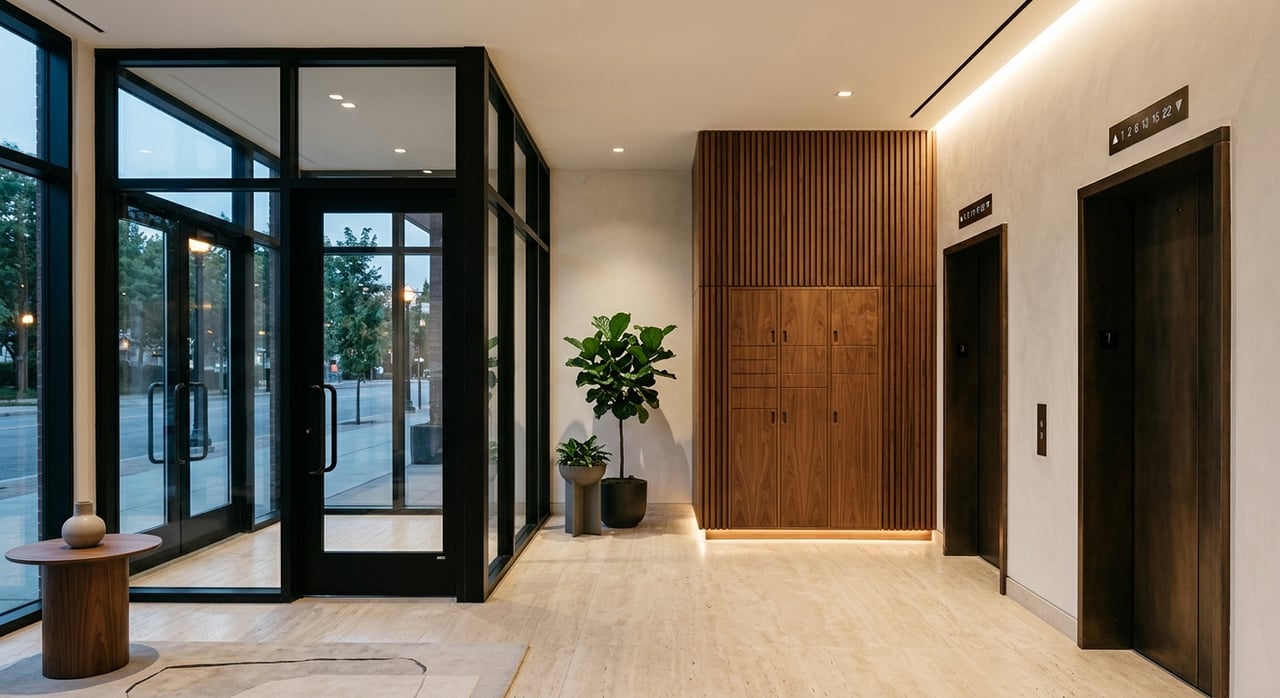
Arrival and elevator design matter. Private elevator vestibules or direct-entry elevators elevate privacy and comfort. If you prefer a discrete flow from car to residence, confirm whether your target unit has private-entry access or a corridor layout. Listings often call this out.
Health, fitness, and spa on site
Newer towers commonly include fitness centers with studio space, spa treatment rooms, and resort-style pools with cabanas. If you want to reduce external appointments, prioritize buildings with in-house wellness facilities and flexible scheduling hours.
Parking, storage, and EV readiness
Most luxury towers assign one to three covered parking spaces, often with valet and some guest parking. EV charging is increasingly common, but capacities and policies differ. Ask how many chargers exist today and the building’s policy for adding more.
Century City building types and examples
Flagship full-service towers
The newest or premier towers emphasize hotel-caliber staffing, refined design, and extensive grounds. A flagship like The Century highlights private-entry elevators in many units, 24-hour concierge and valet, a screening room, spa treatment rooms, a resident dining program, and a pool with cabanas. HOA dues on large homes in these buildings are typically at the higher end, reflecting the service intensity.
Mid-century high-rises with modern updates
Century Park East and Century Towers (2220–2222 Avenue of the Stars) represent the classic Century City high-rise experience, often with larger floor plates, renovated interiors, and strong shared amenities like pool, tennis, and fitness. You usually trade some white-glove services for lower dues relative to the newest towers, with a wide range of unit sizes available.
Low-rise enclaves and townhome pockets
Communities like Le Parc and The Enclave offer landscaped grounds, a quieter feel, and fewer shared services. These can be ideal if you want less vertical living but still value security and convenience.
HOA fees, budgets, and what they cover
Monthly dues vary widely by building and by unit size:
- Mid-century and mid-rise complexes: many one- to two-bedroom units show dues in the low-to-mid $1,000s per month.
- Newer flagship towers and large residences: larger multi-bedroom homes and penthouses frequently list dues in the $3,000 to $6,000-plus range.
What dues typically fund: building staff, security, common utilities like water and trash, master insurance, common-area upkeep, landscaping, and contributions to the reserve fund. Confirm exactly which utilities and services are included in your building’s budget, because these details affect total carrying cost.
California’s HOA law (the Davis-Stirling Act) requires formal reserve planning and detailed budget disclosures. Associations must complete visual reserve studies at least every three years and provide annual review and budget reports. These rules help you evaluate long-term capital needs like elevators and facade work. Review the most recent reserve study and the last two to three years of audited financials early in your diligence. For a concise overview, see this summary of California reserve study requirements and practical notes on reserve studies and funding.
Due diligence: what to request and why
Ask for these documents as soon as you are serious about a unit:
- Governing documents: CC&Rs, Bylaws, Rules and all amendments.
- Financials: current budget, last 2–3 years of financial statements, the reserve study, reserve cash balance, and delinquency reports.
- Minutes and notices: at least 12 months of board minutes and owner notices.
- Insurance summary: master policy limits and owner responsibilities.
- Litigation disclosures: current or pending claims.
- Operational policies: rental caps and minimum lease terms, pet policies, guest and parking rules, contractor and elevator reservation procedures, and storage assignments.
- Building reports: any engineering, elevator, facade, seismic, or other inspection reports.
Three red flags and why they matter:
- Missing or outdated reserve study. Without a current study, long-term costs are harder to forecast, and special assessments become more likely.
- Recent or unexplained special assessment. You need to know the cause, the remaining balance, and whether future phases are planned.
- Pending litigation. Active claims can affect insurance, lending, resale timing, and potential future assessments.
Service and privacy checklist for tours
Use this quick list when you tour or review a building packet:
- Staffing and hours: is concierge and valet truly 24/7, and who handles nights and weekends?
- Private entry: does your unit have a private elevator vestibule or direct elevator access?
- Included vs fee-for-service: which amenities are covered by dues, and which are billed separately?
- Guest logistics: how many guest parking spaces exist, and are there resident guest suites?
- Move-in and deliveries: what are the elevator reservation rules and deposits?
- Security technology: confirm access controls, cameras, patrols, and vendor access protocols.
Century City vs nearby Westside options
- Beverly Hills: Realtor’s late-2025 snapshot showed a median home price near $5.55M, with more single-family estates and higher price per square foot in its condo micro-markets. Choose Beverly Hills if you prioritize single-family privacy and prestige over vertical services.
- Westwood: Redfin’s January 2026 read was in the mid-$1.8M range for median sale price. The area blends university and professional life with a mix of mid-rise and low-rise condos, and fewer hotel-style towers.
- Santa Monica: Coastal living and walkability lead the story. Service models can be robust, but the focus tilts toward beach access and a seaside lifestyle rather than immediate proximity to Beverly Hills offices.
Practical takeaway: if your priority is Westside business access, refined services, and in-town convenience, Century City often fits best. If coastal life or single-family estate privacy leads, consider Santa Monica or Beverly Hills.
Which towers fit your lifestyle
For executives
Prioritize 24/7 concierge and valet, a private-entry elevator, on-site dining or private dining rooms, and well-managed conference and screening rooms. Confirm guest parking for client visits and the building’s vendor access policy. Ask for the staff schedule and response times for maintenance tickets, so you know service will match your calendar.
For downsizers
Look for single-level floor plans, accessible common areas, and on-site wellness spaces. Check housekeeping and vendor options, included utilities, and the association’s long-term reserve plan. Lower-density enclaves can feel serene, while flagship towers provide deeper services at a higher fee.
For pied-à-terre buyers
Focus on privacy, security, and flexible rental or guest rules. Verify minimum lease terms, any rental caps, and guest suite availability. Smaller one-bedroom or one-plus-den units can be ideal if the building offers strong staffing and efficient storage and parking.
Next steps
Century City’s luxury condo market is nuanced. Inventory is limited, services vary by building, and HOA fundamentals drive true cost of ownership. If you want a curated shortlist, a clear read on each building’s budget and reserves, and private inventory when available, start a confidential conversation. Joslin Cuthbertson offers discreet, concierge-level representation tailored to how you live and work.
FAQs
How much should I budget for HOA dues in a Century City luxury tower?
- Expect a wide range. Many mid-century or mid-rise one- to two-bedroom units show dues in the low-to-mid $1,000s per month, while larger homes in flagship towers often run $3,000 to $6,000-plus. Always verify the unit’s current dues and the building budget.
Do Century City condo HOAs usually cover utilities?
- It varies by building. Many include water and trash, sometimes hot water or common utilities. Review the association budget line by line and confirm what your unit’s dues include.
What documents should I review before buying a Century City condo?
- Request the CC&Rs, Bylaws, Rules, current budget, last 2–3 years of financials, the reserve study, board minutes, insurance summary, litigation disclosures, rental policies, and any engineering or inspection reports.
How do reserve studies affect my cost of ownership in a high-rise?
- Reserve studies outline long-term capital needs, which influence future dues and the risk of special assessments. California law requires periodic studies and disclosures, so review the latest documents to understand upcoming projects and funding plans.
Are Century City luxury condos easy to resell?
- These towers form a niche market with limited inventory. Higher-priced listings can take longer to trade than mainstream single-family homes. Check recent days-on-market and comps for your specific building, and factor in seasonality.